

 34
WATER BAPTISM
34
WATER BAPTISM
AND THE WORD OF TRUTH
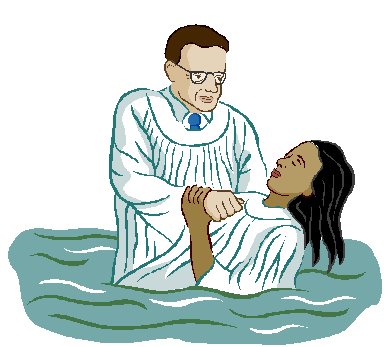
A Refutation of the Godhead Doctrine
of the United Pentecostal Church
The following article is a response to the tract (No.105), Water Baptism according to History and Scripture by David C. Nevins (Pentecostal Publishing House, 8855 Dunn Road, Hazelwood, MO 63042, USA). Nevins is a member of the 'United Pentecostal Church' which denies that the Godhead consists of Three different Persons and insists that Jesus (Yah'shua) is the Name of the Father, Son and Holy Spirit.
"The triune method of baptism is based on only one scripture -- Matthew 28:19. But, this verse is a commandment, and not an example of actual baptism."
So reasons David C. Nevins of the United Pentecostal Church (hereafter abbreviated to UPC). He adds:
"Baptism in the name of Jesus is in complete obedience to Matthew 28:19, for we find that according to Scripture: Jesus is the name of the Father (John 5:43); Jesus is the name of the Son (Matthew 1:21); and Jesus is the name of the Holy Ghost (John 14:26)."
The Father's Name is YAHWEH
A brief examination of the passages cited will demonstrate that the author has seriously misrepresented the Besorah (Gospel) writers by twisting a meaning out of them that is not there. We shall let these passages speak for themselves:
"I have come in my Father's name and you do not accept me; but if someone else comes in his own name, you will accept him" (Jn.5:43, NIV).
What was the Father's Name? The whole Bible declares, from cover to cover, that the Name of Elohim (God) is YAHWEH (sometimes erroneously rendered as "Jehovah"). He so revealed it to Moses:
"I appeared to Abraham, to Isaac, and to Jacob as God (Elohim) Almighty, but by My Name YAHWEH (KJV - 'Jehovah', NIV - 'Lord') I did not make Myself known to them" (Ex.6:3).
"That men may know that Thou, whose Name alone is YAHWEH (KJV - 'Jehovah'), art the most high over all the earth" (Ps.83:18; see Isa.12:2; 26:4, KJV, etc.).
I cite but two scriptures. However, the Name of Elohim (God) the Father is revealed as YAHWEH ('Jehovah') thousands of times in the Bible, so many thousands of times, in fact, that nobody has ever disputed it. Except, it would seem the UPC, who would have us believe that Elohim's (God's) Name has changed from Yahweh to Jesus. It hasn't. Although Jesus's (Yah'shua in Hebrew) Name is associated with Yahweh, by virtue of His membership in the Supreme Godhead, it is not Yahweh, who is the Father.
King David declares of Yahweh: "Thou art my Father, my God (Elohim), and the rock of my salvation" (Psalm 89:26, KJV). Yahweh-Elohim (KJV - "the LORD God") is the Father. The Word of Elohim (God) has said it and there is nothing more to dispute about.
Jesus Christ as "Eternal Father"?
The UPC would no doubt be quick to point out the great Messianic Prophecy of Isaiah in which the prophet declares:
"...His Name (the Messiah's) shall be called Wonderful, the Councellor, The mighty Elohim (God), The everlasting Father, the Prince of Peace" (Isa.9:6, KJV).
At first site this passage might seem to be supporting the UPC position until one realises that the Messiah always acts in Elohim (God) the Father's Name in a purely representitive capacity.
Which brings us back to John 5:43: "I have come in my Father's Name and you do not accept me; but if someone else comes in his own name, you will accept him" (NIV). Here Yah'shua (Jesus) has come as the respresentitive, or ambassador, of the Father by becoming, as the Second Member of the Elohimhead (Godhead), incarnated in the flesh of a human being.
An ambassador abroad represents his government as though the government were there. He is, in a way, the "incarnation" of his government, empowered to act in that government's name. He may also be called an ambassador plenipotentiary, which means that he has the right to sign treaties for his government.
The Master Yah'shua the Messiah (Jesus Christ) was a plenipotentiary, initiating a B'rit Chadashah (New Covenant) in the Name of the Father, as the Father's representitive on earth. When Yah'shua (Jesus) left this world physically, His apostles' assumed that rôle as His ambassadors.
If we employ the UPC's logic, then it follows that either the apostles were all called 'Jesus' or 'Jesus' suddenly became "Peter" or "Paul".
Nobody disputes that Yah'shua (Jesus) is the Son, or that the Name of the Son is Yah'shua (Jesus) (though I shall more precisely define His Name in a minute). We know, from the High Priestly Prayer in John's Gospel, that Yah'shua (Jesus) talked to the Father (Jn.17) -- was Yah'shua (Jesus) talking to Yah'shua (Jesus)? Were there two Yah'shua's (Jesus's)?? No, there were not, unless you believe He has Multiple Personality Disorder. He Himself clearly said:
"...that they (the talmidim/disciples) may be echad (one, united), even as We 8the Father and the Son) are echad (one, united)" (Jn.17:22, KJV).
The talmidim (disciples) were distinct persons with distinct names. In the same way, the Father is a distinct Person with a distinct Name (Yahweh). And Yah'shua (Jesus) taught that the oneness between the Father and Son could be enjoyed between the talmidim (disciples). Peter could be echad (one) with John who could be echad (one) with Paul. Their's was a unity of purpose, ahavah (love) and simcha (joy), just as obtained between Father and Son. But at no time did Yah'shua (Jesus) mean that Peter should become John should become Paul. At no time did these three disciples have the same first name even though they all had the same last name, namely, 'Christian'. They belonged to the Son, even as the Son belongs to the Father.
If you backtrack a verse in our study of John 17 you will find that this echad unity also involved the talmidim (disciples) being in one another (v.21). The reflection of the divine personality would be seen in the talmidim (disciples), just as the Father's could be seen in the Son's -- as Yahweh's was seen in Yah'shua's (Jesus's). Thus Yah'shua (Jesus) could, in answer to Philip's request to be shown the Father, point to Himself -- the divine attributes of Yahweh were in Yah'shua (Jesus) (Jn.14:8-9).
Yah'shua Came in the NAME of Yahweh, the Father
Yah'shua (Jesus) said that He had come in His Father's Name, as His representitive or ambassador. I bear my father's name, Warren, as a surname, and in that respect am carrying on his name. If I had been living in Biblical times, I would have been known as 'Christopher, son of Keith (or 'Christopher ben Keith'), of the family Warren' and carried his name that way' However, I am a mortal, as was he.
The passage in John 5:43 has another dimension that is largely hidden to Western Christians because they have actually changed the Name of the Son. 'Jesus' was not the Name of the Son in biblical times and if you had asked the first apostles who 'Jesus' was they wouldn't have known who in the world you were talking about.
The fact of the matter is, 'Jesus' is the Anglo-Greek translation of Yah'shua (or Yahushua). Yah'shua's (Jesus') real Name is YAH'SHUA. You will immediately notice that His Name contains the Father's Name, Yahweh. Indeed, Yahweh was sometimes abbreviated to YAH. The name of the judge Joshua is, in reality, an anglicisation of YAHOSHUA which is a variation of the Name Yah'shua. Joshua as a deliverer was also a type of Yah'shua (Jesus) and it is appropriate that he bore the name Yah(weh) as well of His Son, Yah'shua.
Thus Yah'shua (Jesus) literally bore the Name of His Heavenly Father - and our Heavenly Father (John 20:17) - in His Name, just as many of His prophets and other distinguished followers did in biblical times.
I am Warren, like my father before me, but Warren is not Christopher. Yah'shua (Jesus) is the Name of the Son, but the Son is not the Name of Yah'shua (Jesus). Yahweh is the Name of the Father, but the Father is not the Name of Yahweh. Yah'shua (Jesus) is Elohim (God), and Yahweh is Elohim (God), but Elohim (God) is not Yah'shua (Jesus) or Yahweh because Elohim is a title, not a name. There are suble differences.
Is Jesus the Holy Ghost?
In His attempt to destroy the Name of Yahweh, the Name of the Supreme Elohim (God) and Father, David C. Nevins says that "Jesus is the name of the Holy Ghost" and he refers to John 14:26. But what does this Scripture actually say? Let us see:
"But the Councellor, the Ruach haQodesh (Holy Spirit), whom the Father will send in My (Yah'shua's/Jesus') Name, will teach you all things and will remind you of everything I have said to you" (John 14:16, NIV).
So, according to the UPC, "Jesus (the Holy Spirit), whom Jesus (the Father) will send in Jesus' Name, will teach you all things.....".
Can anybody deny that this is gobbledy-gook? It is shere gibberish! Utterly meaningless.
Does the Ruach haQodesh (Holy Spirit) have a Name? According to the Bible, the Ruach haQodesh (Holy Spirit) is both personal and impersonal. In Hebrew the Ruach (Spirit) is always feminine - the Ruach (Spirit) is a 'She' not a 'He' (or even an 'It'). The 'Holy Ghost' is our Heavenly Mother! It is Yahweh who sends the Ruach (Spirit) in Yah'shua's (Jesus') Name -- not with Yah'shua's (Jesus') Name but as one Who acknowledges the toqef or authority which the Father, Yahweh, has given to Yah'shua (Jesus) as the second member of the Elohimhead (Godhead) (Matt.28:17; Rev.2:27). All the toqef (authority) Yah'shua (Jesus) exercised on earth came from the Father, Yahweh (John 17:7). How could such toqef (authority) come from Himself? How could 'Jesus authorise Jesus'? It is nonsensical.
The UPC also forgets that whilst Yah'shua (Jesus) the Son is equal to Yahweh the Father in power and toqef (authority), it is only because the Greater Toqef (Authority), Yahweh, has given it to Him in the first place. An ambassador is given the same toqef (authority) as his government, to act in the name of that government, but everyone knows that the abbassador is still subject to the government who may withdraw him at any time.
Thus Yah'shua (Jesus) could rightly say that Yahweh was greater than He was: "the Father is greater than I" (John 14:28; see 10:29). Who is "I"? Yah'shua the Messiah (Jesus Christ), the Son of Elohim (God). Since when was a son ever greater than the father he is required by the Torah to honour?! Though we mortals, as sons of our fathers, may grow up into being fathers ourselves, so long as our own father is alive in the flesh, we must reverence and honour him in the Master Yah'shua (Jesus). It is in this sense that Yah'shua (Jesus) is also a Father to us. But Yahweh is His Father, and will always be so. Does Yah'shua (Jesus) being the "Eternal Father" make Him the same as Elohim (God) the Eternal Father, Yahweh? How can He in the light of other Scriptures? We must take all of the Scriptures and not pick and select those which support pre-conceived doctrines.
Yah'shua (Jesus) is not the 'Holy Ghost' (a more ancient English word for "Holy Spirit") and nowhere indicates that He is. That the Father, Son and Ruach haQodesh (Holy Spirit) are closely connected to one another (as Father-Son-Mother) is another matter, just as true Christians have an intimate fellowship in the Ruach (Spirit), but we do not suddenly cease being ourselves or suddenly become the Ruach haQodesh (Holy Spirit) ourselves. It is only the gurus of the Hindu-inspired New Age Movement who teach such pantheistic blasphemies, claiming that since Elohim (God) is in us, and is everywhere, that we are ipso facto Elohim (God) too.
Be Baptised in the Name of Jesus
Nevins is at pains to point out that Christians are everywhere commanded after the Gospels to be baptised in the Name of Yah'shua (Jesus). Of course. We are baptised into His salvation which He won for us. And he cites nearly 20 references to prove his point. This is fine, provided one does not try to ignore other passages which would seem to suggest that we are, in fact, baptised into three Persons.
To say, as he does, that to be baptised in the Name of Father, Son and Holy Spirit is only a "commandment" but "not an actual baptism" is to really twist words! If Yah'shua (Jesus) comanded us to baptise in the Name of the Three Persons of the Elohimhead (Godhead), then it is obviously THAT WE MUST DO SO, and to refuse to do so, is to DISOBEY HIS MITZVOT (COMMANDMENTS). And to disobey His mitzvot (commandments), which UPC doesn't seem to mind doing at all, is to cease loving Him (John 14:21). This was Yah'shua (Jesus') Great Commission.
Nevins does not try to explain Matthew 28:19 because it totally undermines his theology. All he can say is this:
"Some, believing that disharmony exists between Matthew 28:19 and Acts 2:38, say they would rather trust the words of Jesus than Peter. However, we find in Acts 1:2 that Jesus, through the Holy Ghost, "had given commandments unto the apostles who he had chosen". And in Matthew 16:19 we find that Jesus gave Peter "the keys of the kingdom of heaven." On two separate occasions (Acts 2:38 and Acts 10:48) Peter commanded that the believers be baptised in the name of the Lord Jesus."
There are some very alarming statements here. Firstly, there is no disharmony between Matthew 28:19 and Acts 2:38 -- that is just a straw man which he has set up in order to deflect attention from his own contradictory statements. Beware of those who set up one scripture against another!
He then goes on to effectively say that Yah'shua (Jesus) contradicted Himself by changing His instructions; in effect, Christians are no longer to baptise in the Name of the Father, Son and Ruach haQodesh (Holy Spirit), but only in Yah'shua's (Jesus') Name.
Nevins then makes a very Roman Catholic statement claiming that Peter was, in effect, a pope with toqef (authority) to change scripture, and that he alone could bind and loose. But nowhere does Yah'shua (Jesus) say that this toqef (authority) was only given to Peter. If it had, Paul would never have had the toqef (authority) to rebuke him for teaching false doctrine and James would never have presided as the leading apostle at the Council of Jerusalem. That is, however, an aside.
More importantly, we are being told that Acts 2:38 has replaced Matthew 28:19, and this because Peter was given special powers by Yah'shua (Jesus), presumably to do just that. This is a very serious accusation and puts a wedge between Yah'shua (Jesus) and the apostles, making the apostles greater. But why should we be persuaded to believe Nevins who claims that Acts 2:28 has replaced Matthew 28:19? He has no choice to say this because Matthew 28:19, like an irritating sore, stands out and condemns him and the UPC. Like the Jehovah's Witnesses who pervert the scriptures when they disagree with their doctrines, or the liberals who simply remove them altogether, justifying their textual surgery by using minority manuscipts known now to have been throw-aways because of errors, the United Pentecostalists are trying to twist scripture to fit a pre-conceived doctrine.
But to be fair to them, let us take a look at Acts 2:38: "Repent and be baptised, every one of you, in the name of Yah'shua the Messiah (Jesus Christ) so that your sins may be forgiven. And you will receive the gift of the Ruach haQodesh (Holy Spirit)" (NIV).
What is the problem? There is none. Peter tells the new converts to be baptised into Yah'shua (Jesus) for the remission of their sins. Yah'shua (Jesus), in Matthew 28:19, tells His followers to make talmidim (disciples) of all nations, baptising them in the Name of the Father, Son and Ruach haQodesh (Holy Spirit), teaching them to obey all the mitzvot (commandments)! Look at it again: Peter says: be baptised in the Name of Yah'shua (Jesus) FOR THE REMISSION OF YOUR SINS, and Yah'shua (Jesus) says, baptise new believers in the Name of the Father, Son and Ruach haQodesh (Holy Spirit) to make them into talmidim (disciples) and to teach them to obey the mitzvot (commandments). Yah'shua (Jesus( remits sins, and that is what being baptised into the Son symbolises. But being baptised into the Father implies obeying the mitzvot (commandments) - obeying the Torah! And being baptised into the Ruach haQodesh (Holy Spirit) means discipling new believers, as a mother raises her children according to their father's wishes. Baptism isn't only for the remission of sins -- it is also for discipleship and obeying Torah -- for messianic life as a while. It's a description of the whole Besorah (Gospel) program!
Now here we have the solution to the apparent 'contradiction', which is no contradiction at all. Peter is talking about one aspect of baptism and Yah'shua (Jesus) is talking about it all!
Discipleship is Missing
Commandment-keeping is not very popular in much of evangelical Christendom yet the Father, Yahweh, reaffirmed the commandment-keeping clearly demanded in His Torah and Yah'shua (Jesus) and the apostles constantly reaffirmed it. Yet commandment-keeping is a fruit of salvation and we need to ever be reminded of the standards that the Father and the Son expect of us, confirmed by the Ruach haQodesh (Holy Spirit) or Comforter who teaches us all emet (truth)!
In making His triune statement Yah'shua (Jesus) prefixed it by saying: "All toqef (authority) in heaven and on earth has been given to Me. THEREFORE go and make talmidim (disciples)...." (Matt.28:18, NIV). Yah'shua (Jesus) gives this triune statement His seal of TOQEF (AUTHORITY) and this the United Pentecostalists should make especial note of it. This was not a conditional mitzvot (commandment), subject to later change, but it was unchanging and unconditional. He is, in effect, saying, "I have been given the toqef (authority) by Yahweh to command you to observe this baptismal formula." And, as if to make no allowance for change, He adds, "teaching them to obey EVERYTHING I have commanded you" (v.20). And, if they do this, "I will SURELY be with you always, to the very end of the age".
Friends, this baptismal statement cannot be changed. It must be obeyed as part of the "everything" Yah'shua (Jesus) commands us to obey. It has the toqef (authority) of the Father and the Son. It may be a single statement on the matter, but does that reduce its toqef (authority)? Must something be repeated a dozen times before we are expected to obey it? Yah forbid! When my father told me to do something, I didn't need the order repeated!
So why did Yah'shua (Jesus) specifically command this threefold baptismal formula? To remind us of the need to obtain salvation through the Son, obey the Father's mitzvot (commandments) and to be trained or discipled as all children must be.
Repent!
The United Pentecostal Church has committed a grave sin -- they have exalted the Son above the Father, even robbing Yahweh of His Name. I urge them to repent speedily! This is not a light matter because it is dishonouring to Yah'shua (Jesus) Himself who always subjected Himself to the Father's will and honoured Him even unto death on a cross. They have broken the First Commandment -- and what could be worse!
Though more could be said I believe this should suffice. Elohim (God) gives us no space to alter scripture to suit our prejudices -- we must take it all or leave it all. Though Nevins also quoted many encyclopaedias these are not the authoritative standards by which Christians judge matters -- only the Bible can be the final arbitrator and toqef (authority).
First edition, Oslo, 25 November 1997
Prepared at the request of an Indian Pentecostal brother in Yah'shua the Messiah (Jesus Christ).
Second edition, Arvika, 25 November 2013

This page was created on 7 December 1997
Last updated on 25 November 2013
Copyright © 1987-2013 NCCG - All Rights Reserved